Day 111

Movement, wind and dust.

By Marco Hernandez.

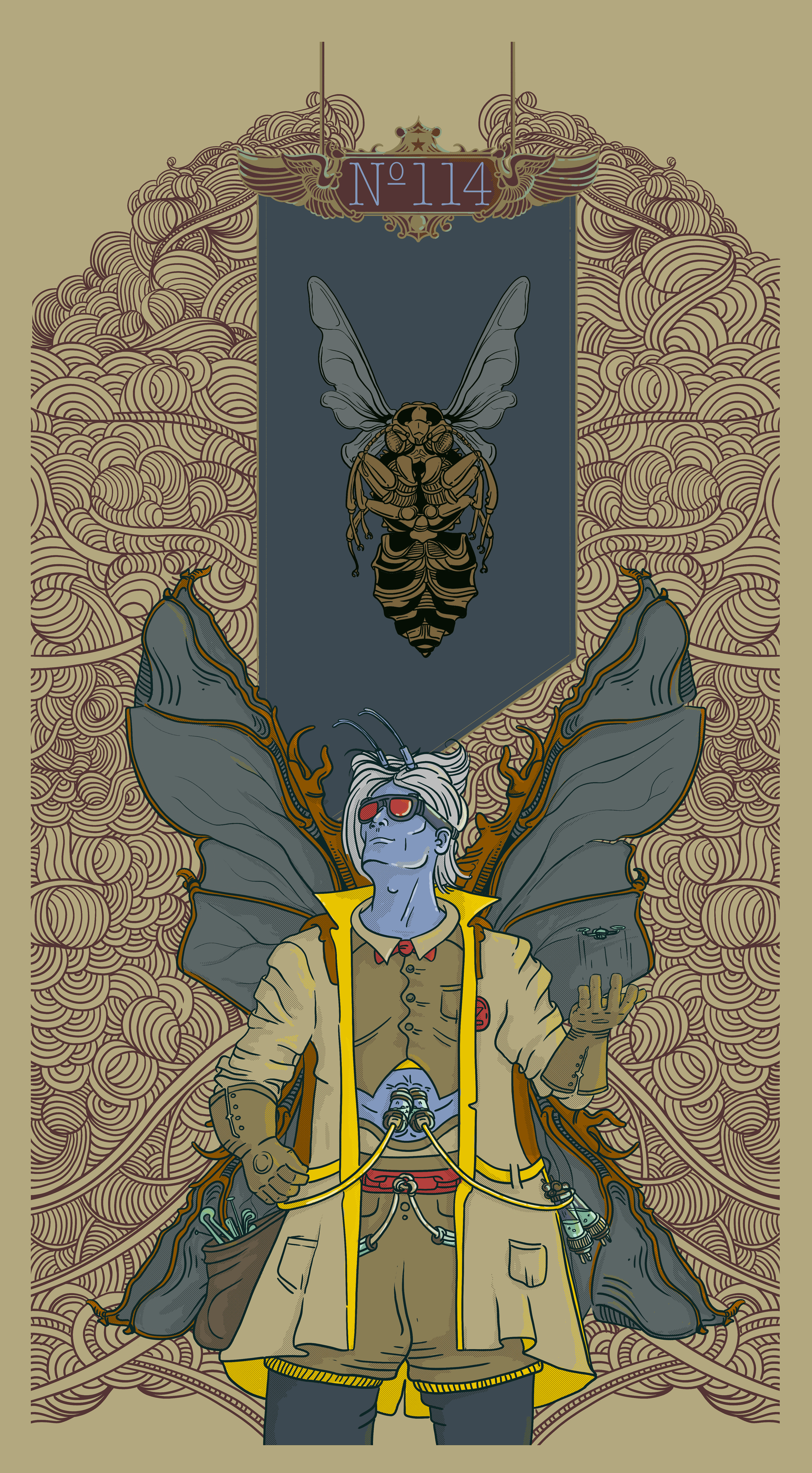
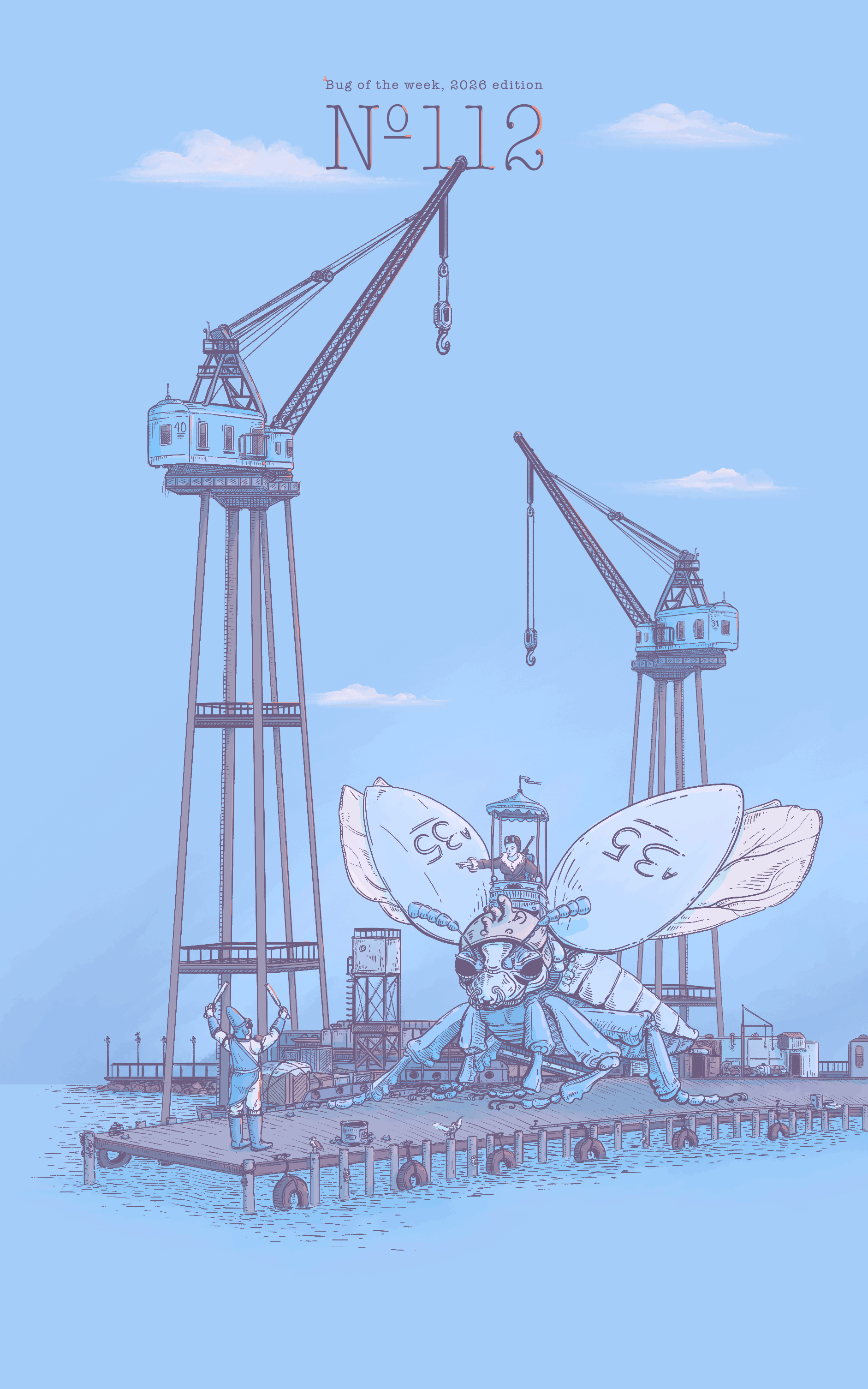
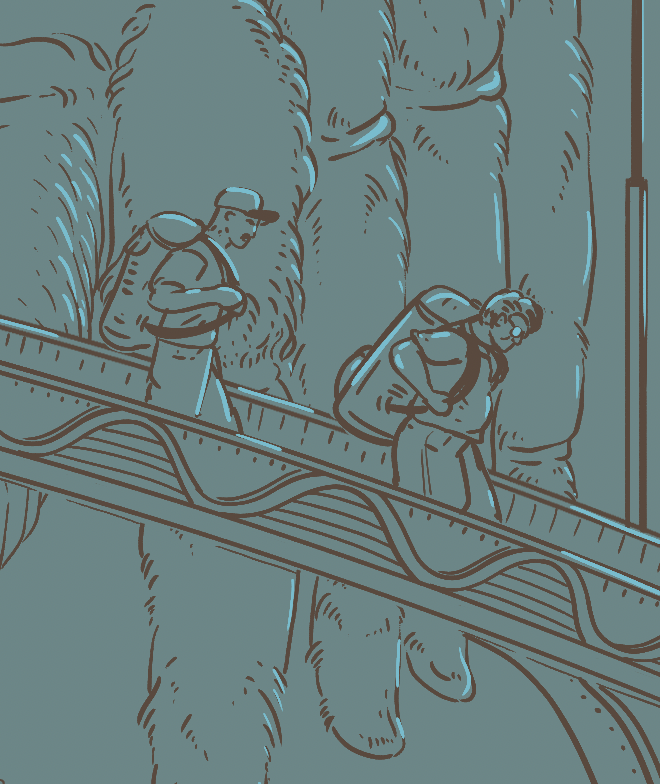
Today’s bug is really a mix between the Ants project that mentioned before here and the wonderful legacy of Moebius.

I first discovered the art of Jean Henri Gaston Giraud [ Moebius ] thanks to my friend Daniel Solano, a very talented artist in his own right. Since then, the art of that French artist has become an inspiration and a point of reference for me. Now, even when I see abstract forms, I somehow connect images of imaginary worlds with those references that made such a strong impression on me years ago.

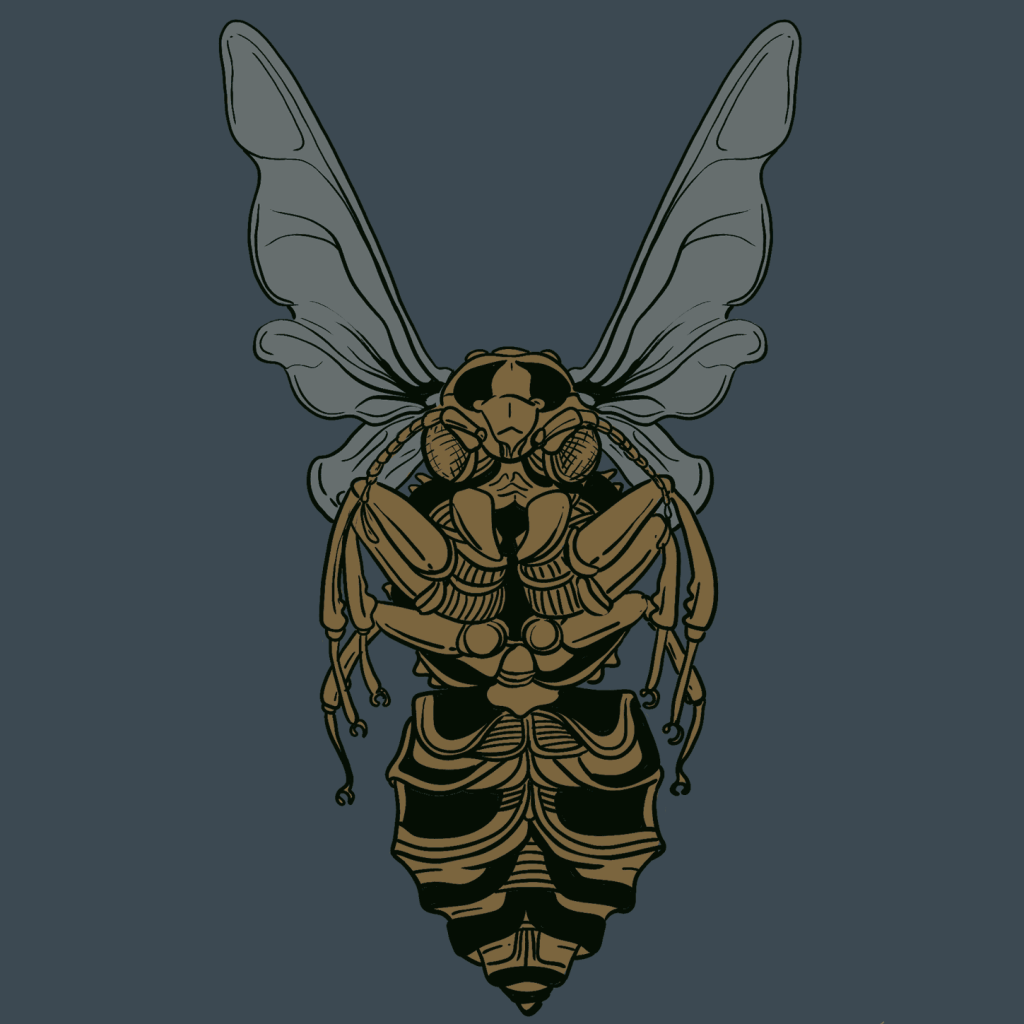
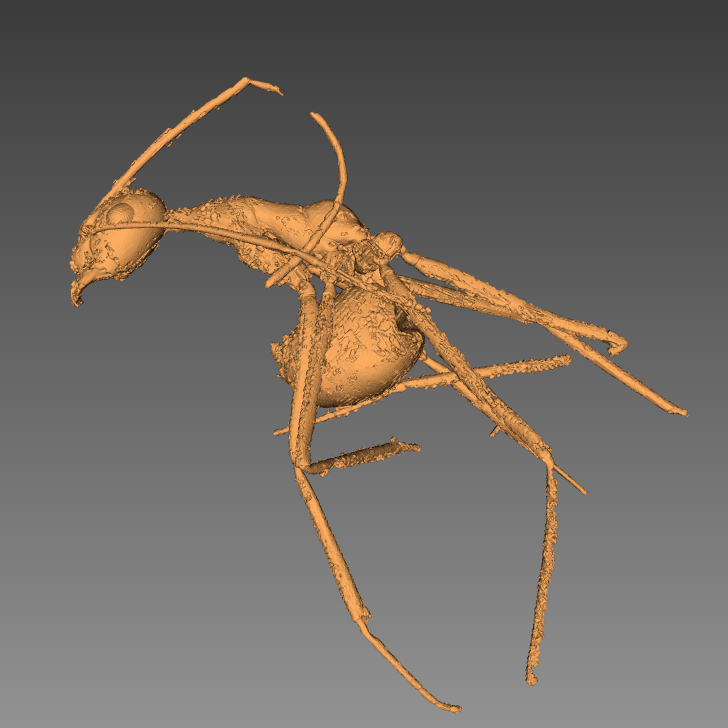
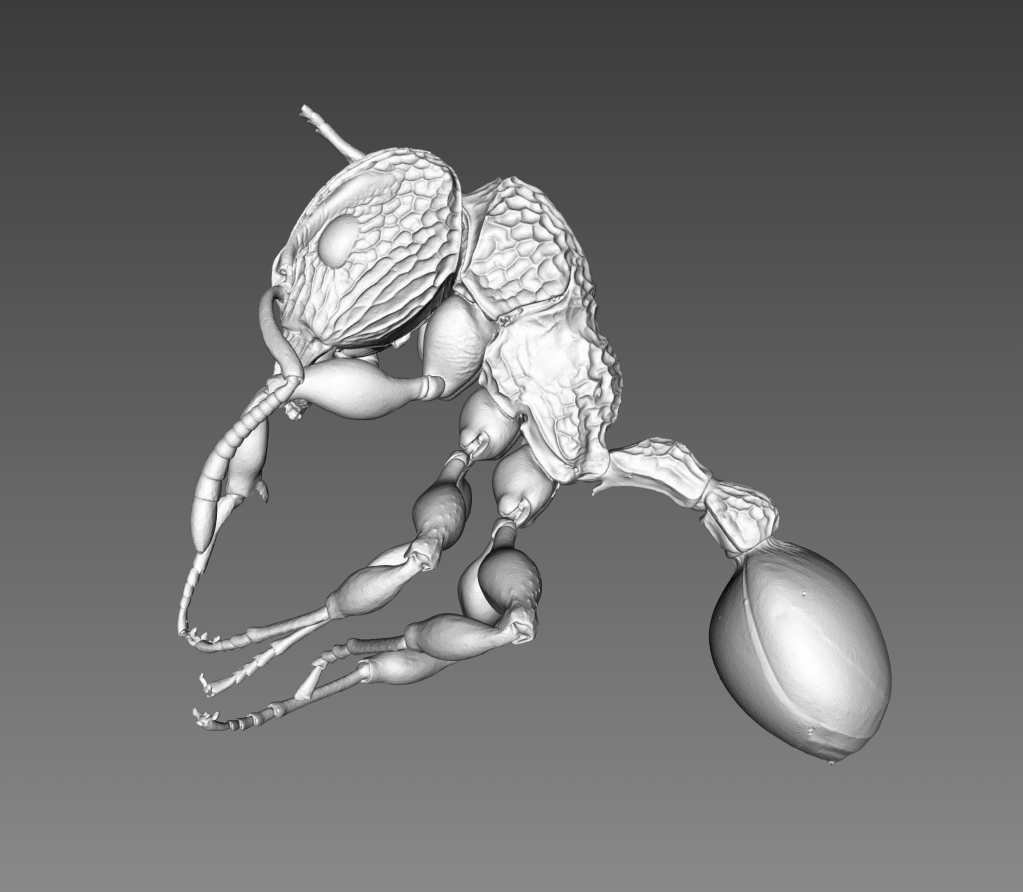
So here I am, looking at a digital scan of an ant:

Ant scan specimen 0242

The posture itself is so strange—almost as if this ant were running, frozen in a snapshot right at the finish line of an Olympic race… But you may remember from day 106 when I talked about the AntScan project that the original animal was frozen in time, just as it died, in a glass vial.

However, looks so dynamic, do you think?

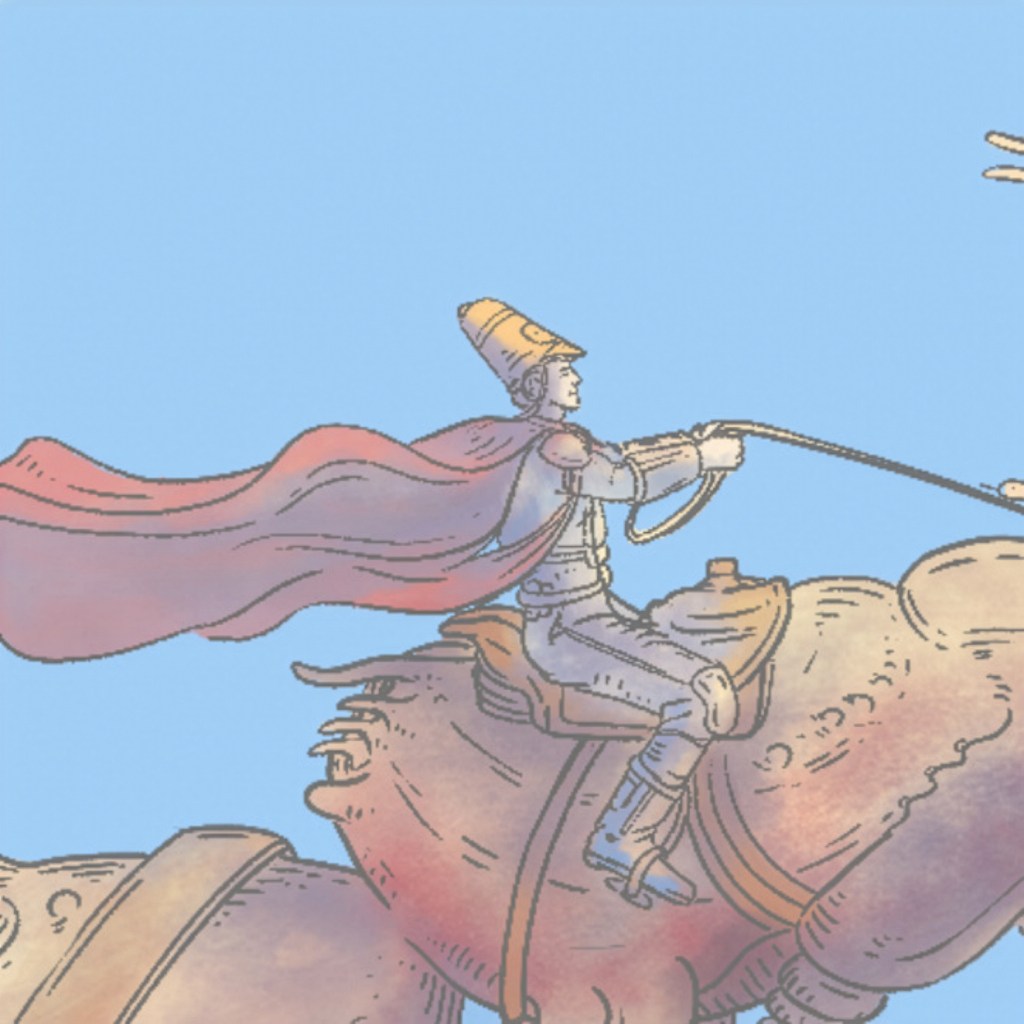
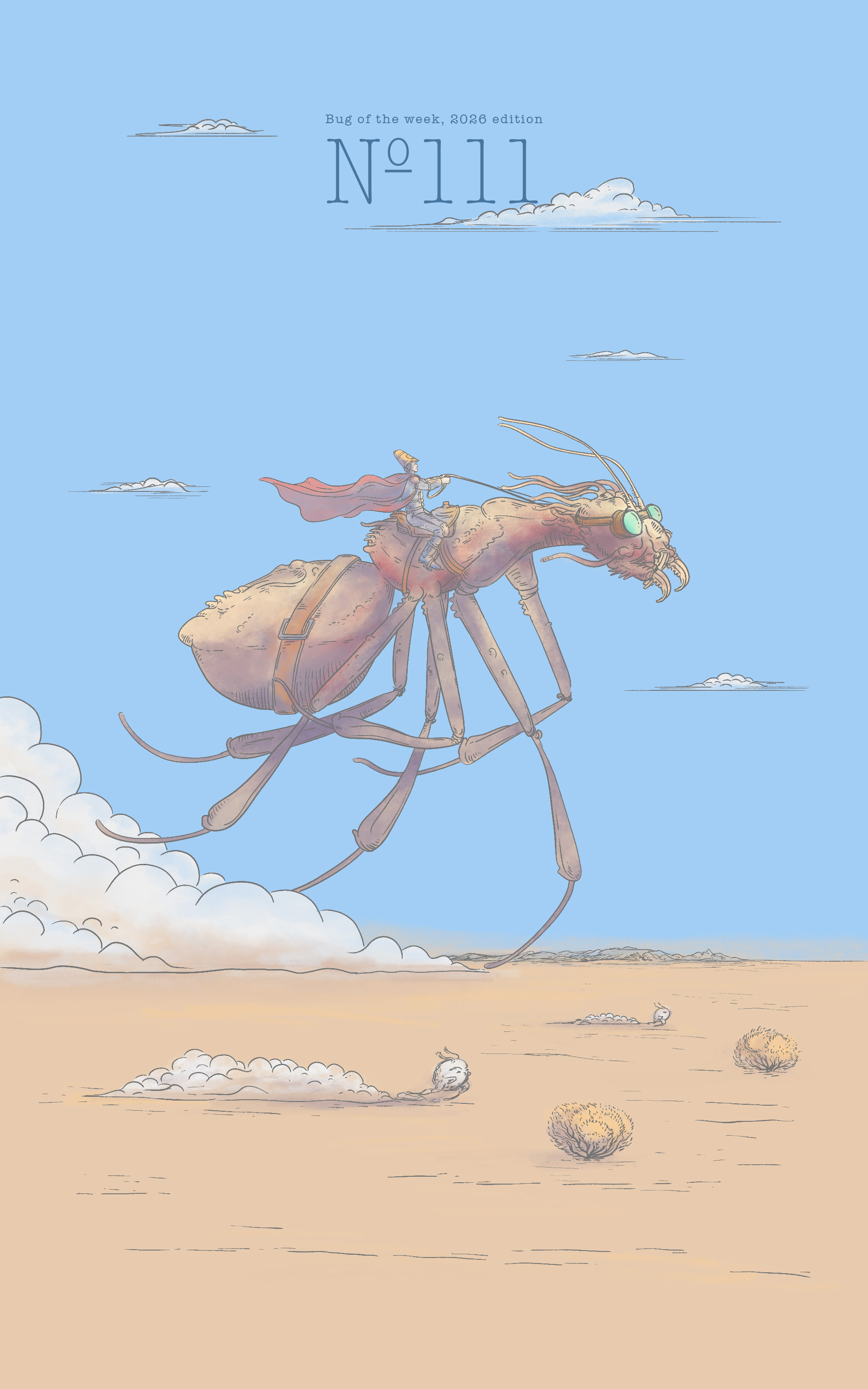
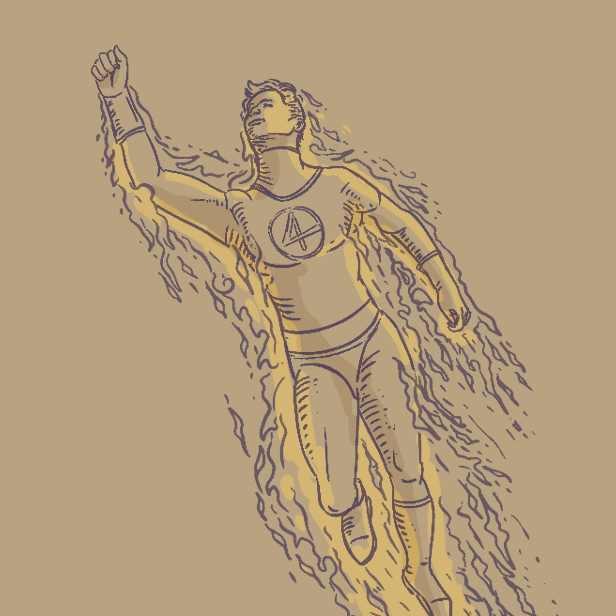
It brought to my mind the scenes drawn by Moebius with weird creatures running at full gallop while the rider can feel the gentle touch of the wind on its face.

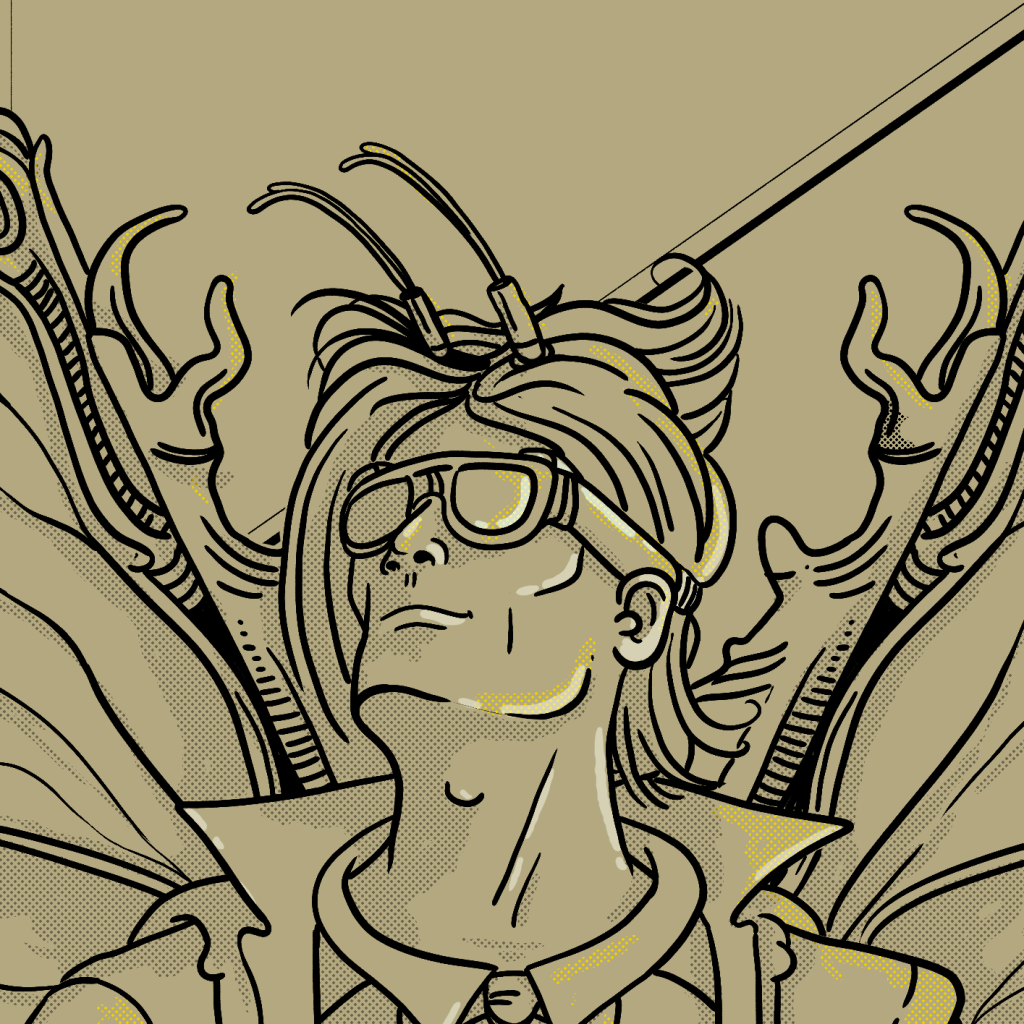
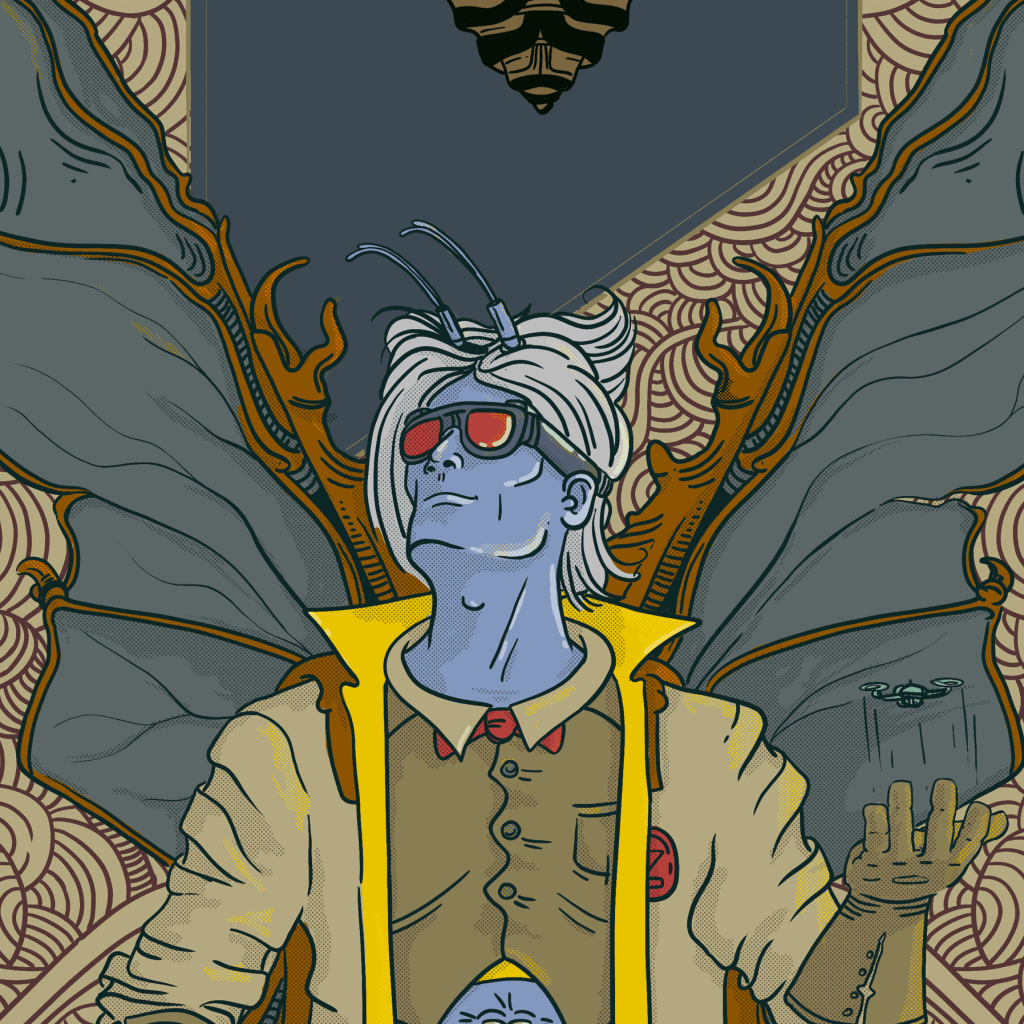
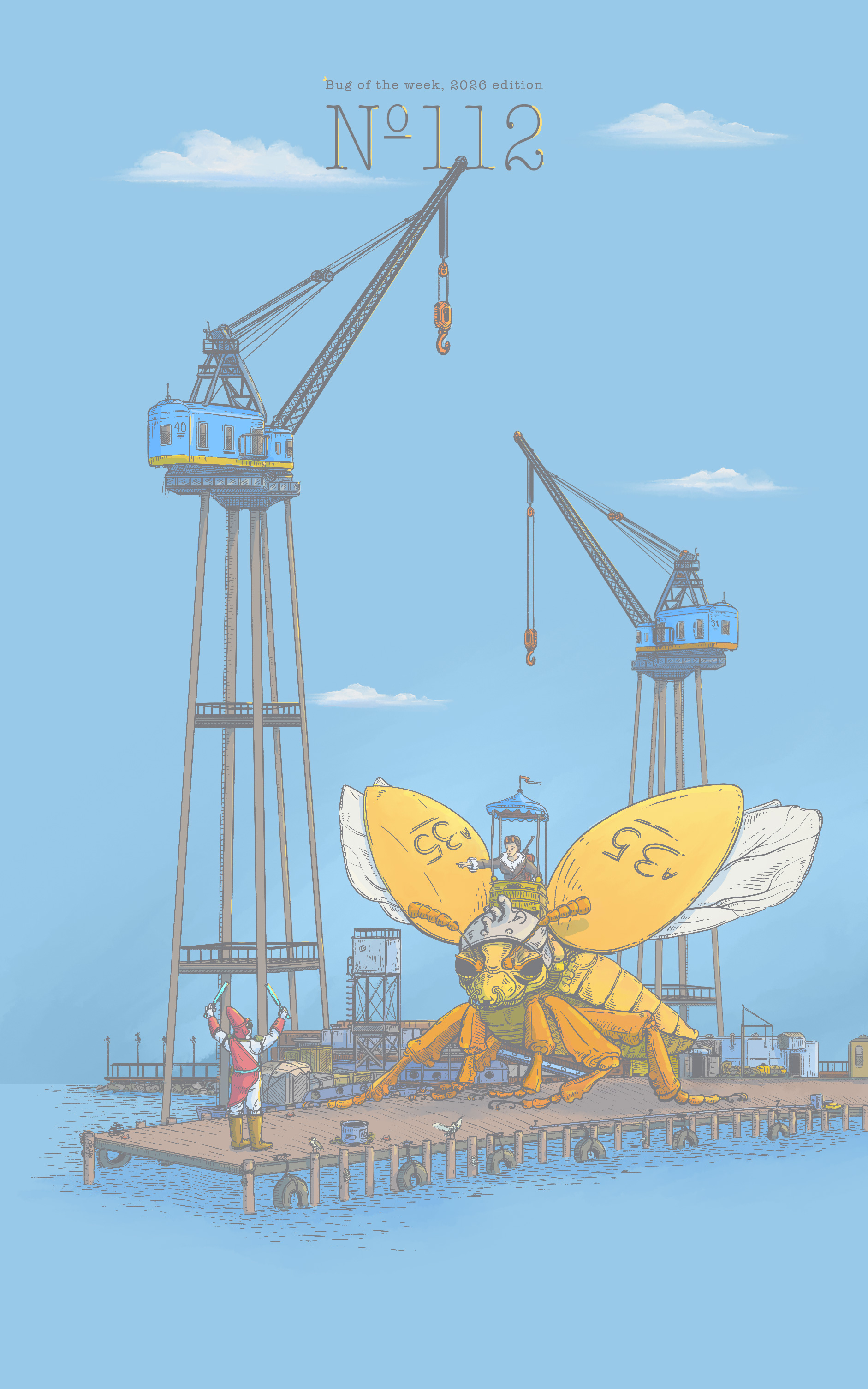
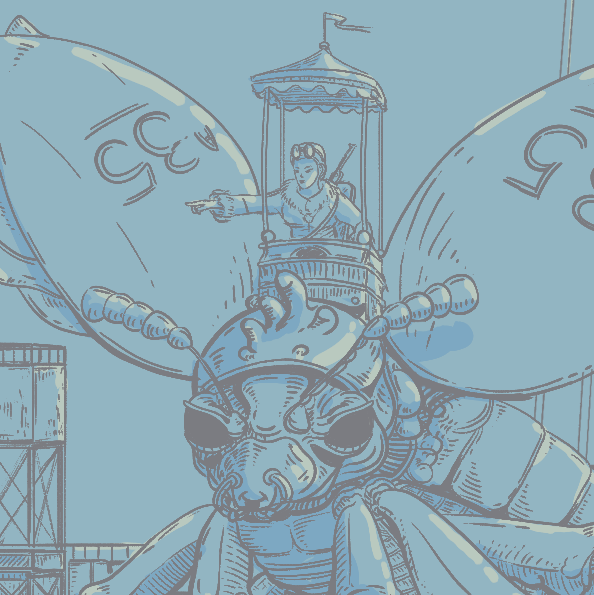
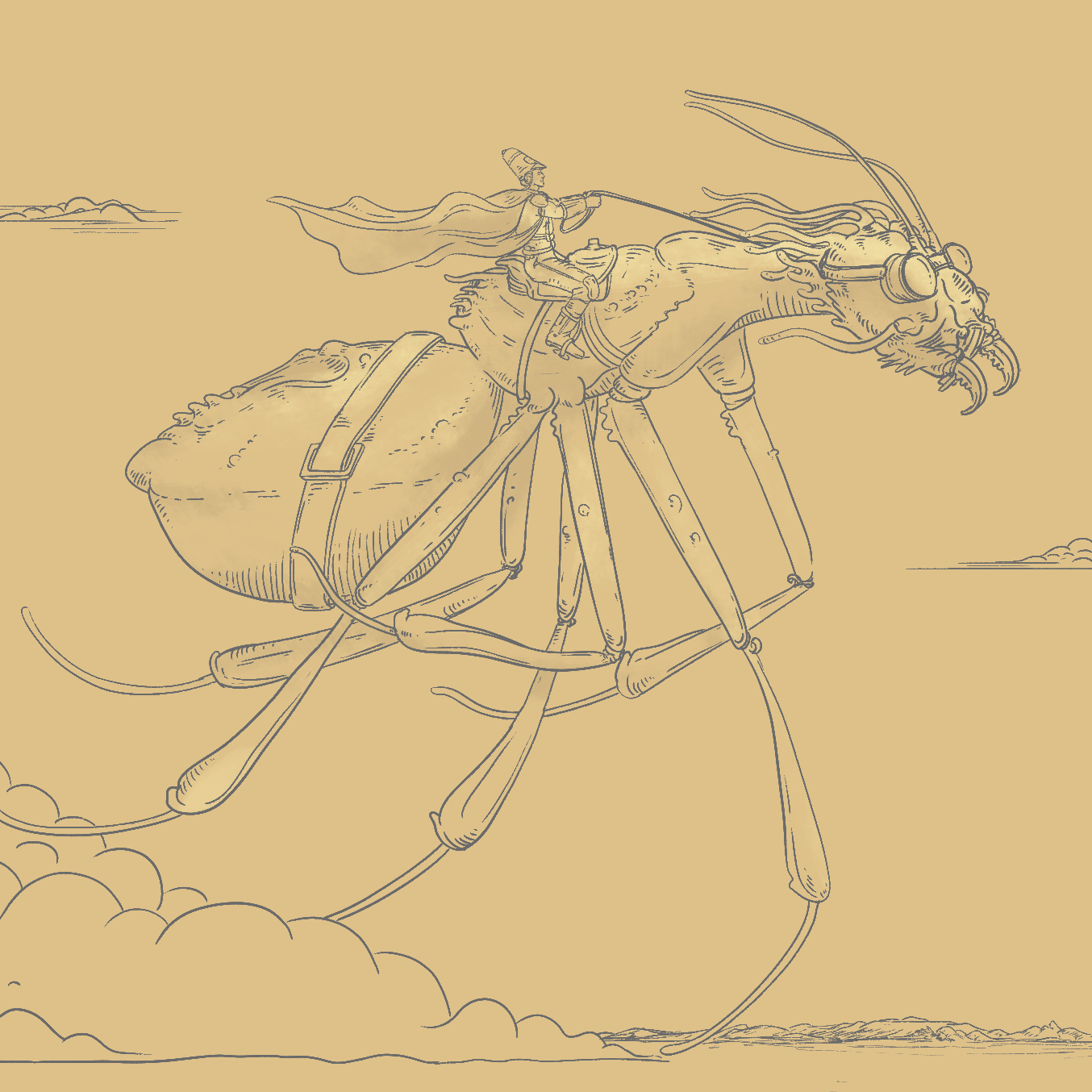
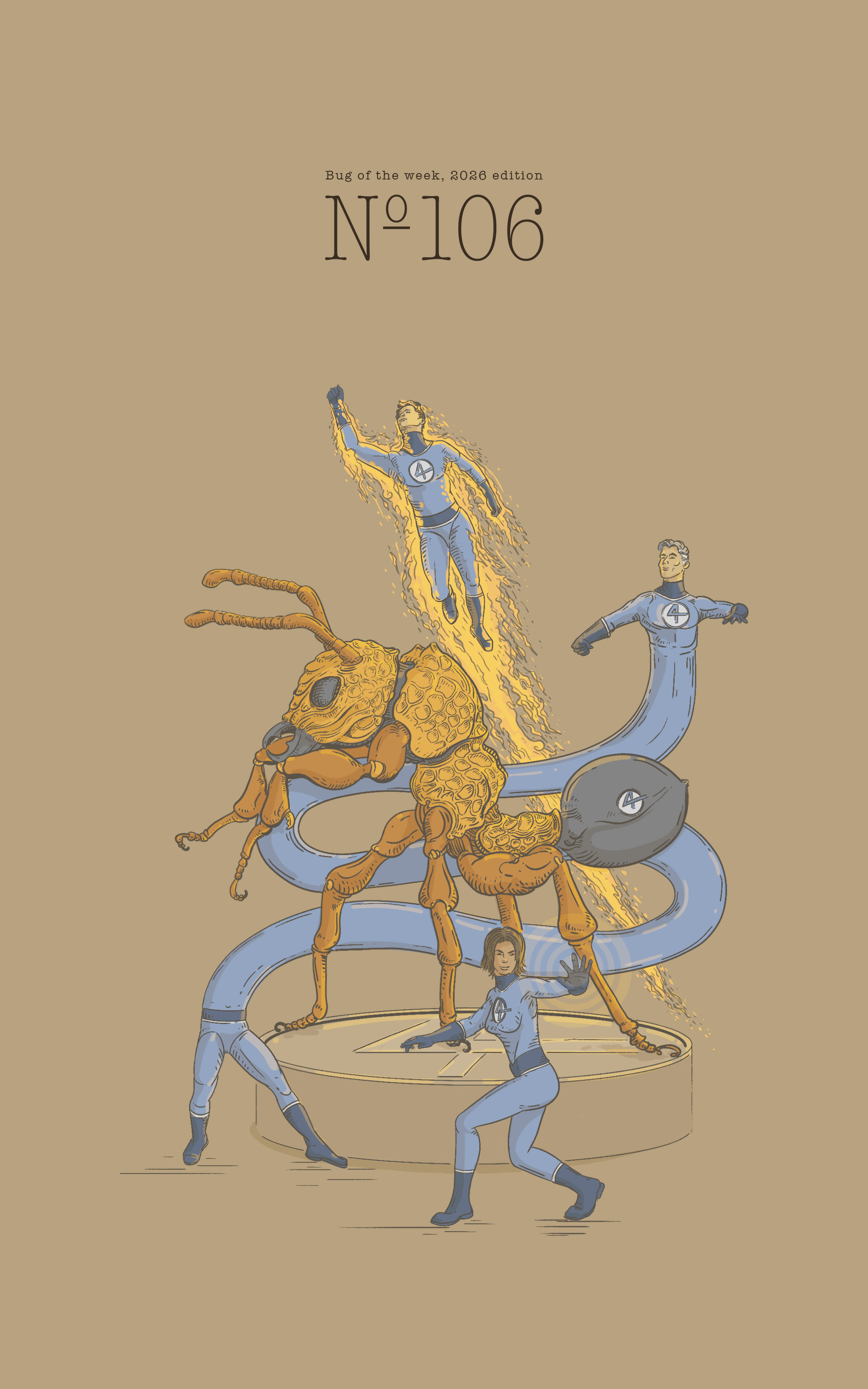
So here’s my version of specimen 0242:

By Marco Hernandez

I hope you are having a great weekend, thanks for reading/watching. See you next week to explore the sources of inspiration that await us everywhere.

By Marco Hernandez

Day 110

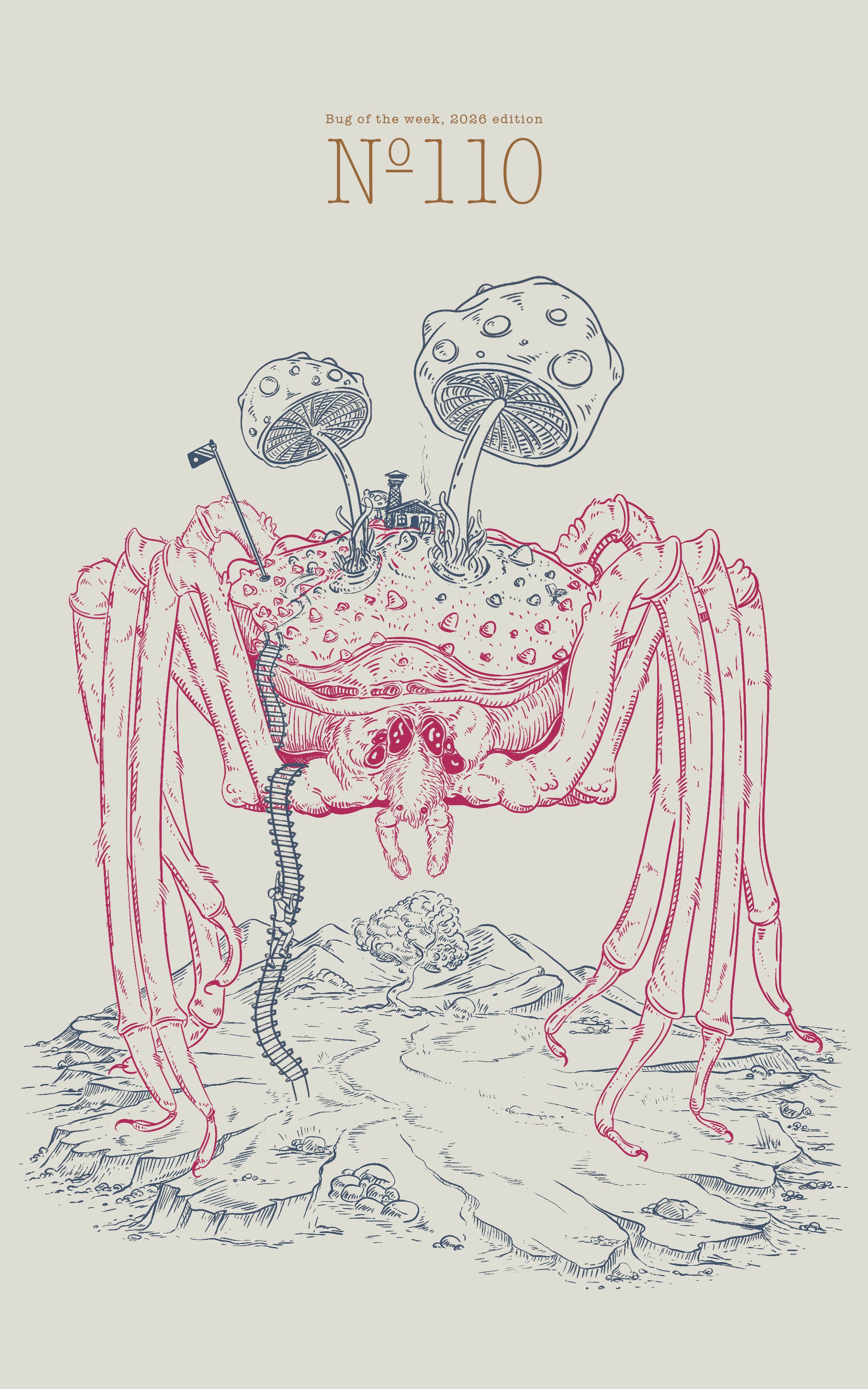
Fake eight-legged zombies.

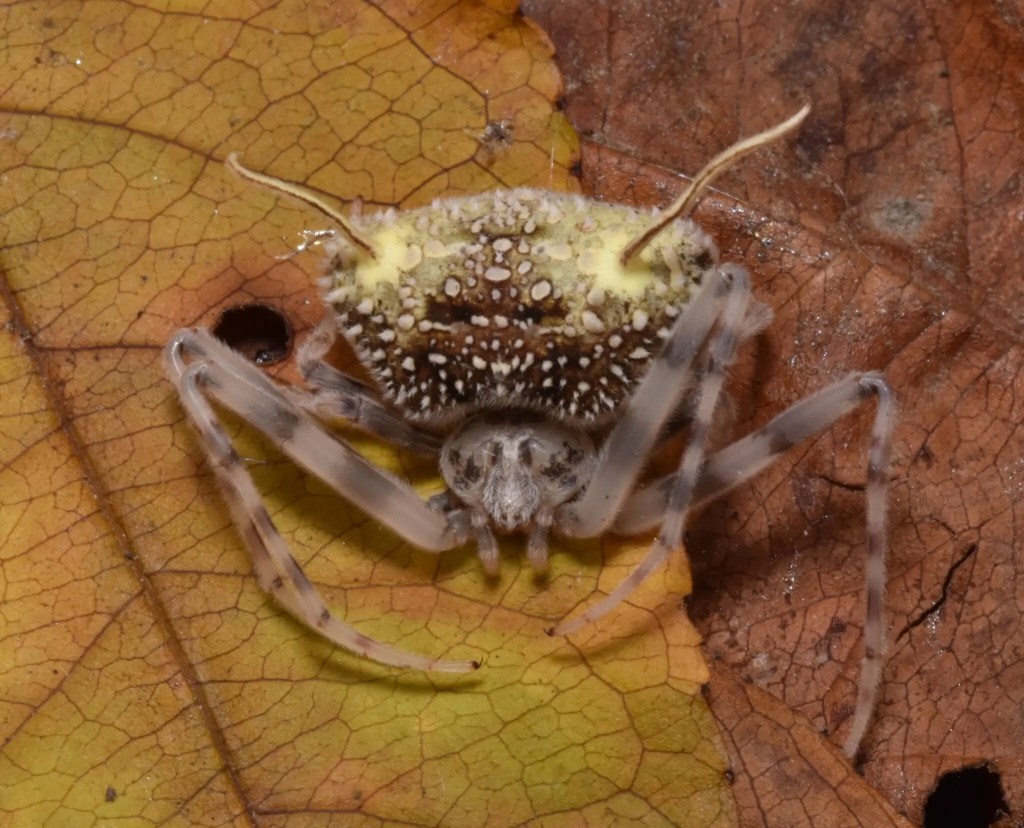
Back in March I read this article about an Ecuadorian spider that mimics the infection of a Gibellula fungus, also known as the zombie fungus because it takes over control of insects body forcing them to climb and find the best spot to anchor it host firmly before the bloom of the fungi to best release spores. Sounds like a plot of a horror movie of an alien-like agent infecting creatures.

But why would a creature want to imitate such a terrible outcome?

By Marco Hernandez

Researches have reported seen ants carrying infected fellows as faraway as they can before the fungus bloom to prevent a the extermination of their colony. The Gibellula takes over ants, grasshoppers, spiders or any insect that gets in contact with the spores… But this spider saw an opportunity in the fear.

The Ecuadorian spider mocking a fungus infection. Photo by David R. Díaz-Guevara highlighted at the Trilobites article.

The finding was registered by Dr. Gustavo Hormiga, an arachnologist (spider researcher) and professor at George Washington University. Despite his name, Dr. Hormiga (translates to “Doctor Ant” in Spanish), has dedicated his career to studying spiders rather than insects.

Dr. Hormiga explained in the article that those spiders might have developed that terrifying technique of mimicking zombie fungi as an advantage to allow the, to get get close to the prey before attaching. This because once the fungus blooms, the insect becomes just a dead shell.

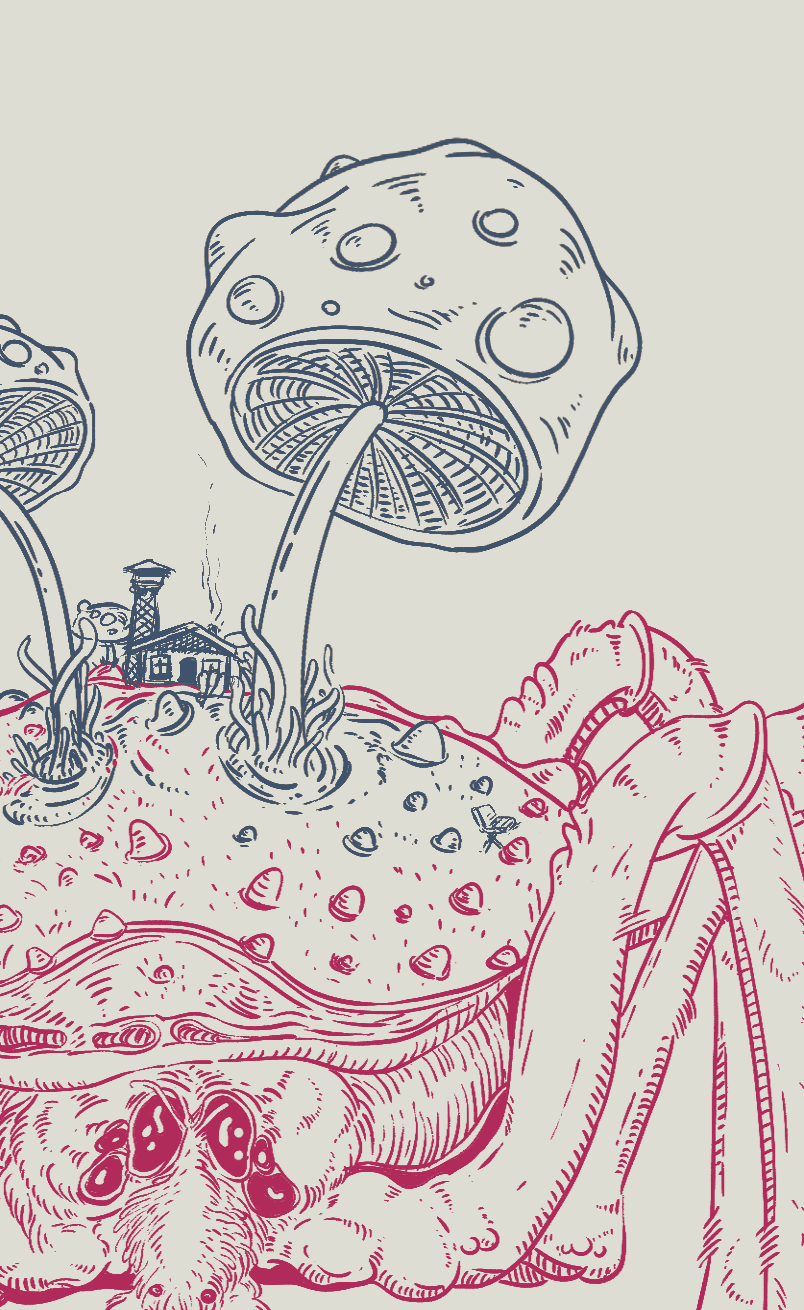
Crazy (or very clever) amazonian spiders wearing fungus hats! 🤯

By Marco Hernandez

Have fun, enjoy your weekend, and watch out for zombies!

See you next week!

Day 109

The laundry world.

There are many tv shows and movies with scenes happening in or around laundries. I guess that’s part of the U.S. culture exported to the world through films.

In fact, that was one of the hardest things for me to wrap my head around when I moved to the United States a few years ago—I mean, why can’t we have a washing machine at home, just like we do in practically every other part of the world?

Now you are wondering, and that what has to do with your bugs blog?… well, while at the laundry shop, I listen to music, or read a book or something to pass the time while I wait for the clothes to stop spinning.

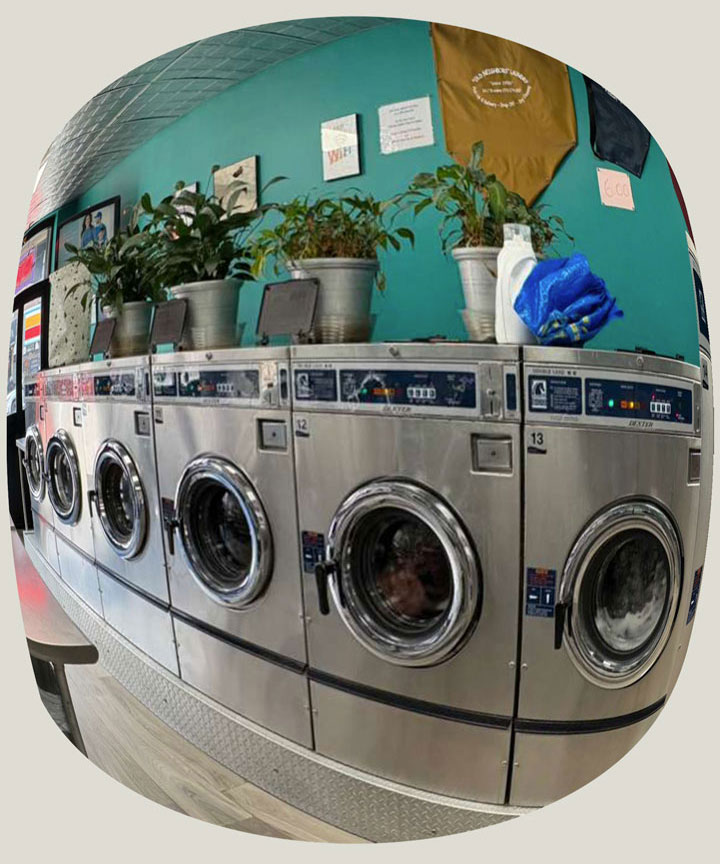
People walk past in front of rows of machines with those iconic round lids; the dryers are stacked one atop another, and after staring at them for a while, you start to let your imagination run wild.

My neighborhood laundry shop in Astoria.

What do you see in that photo?

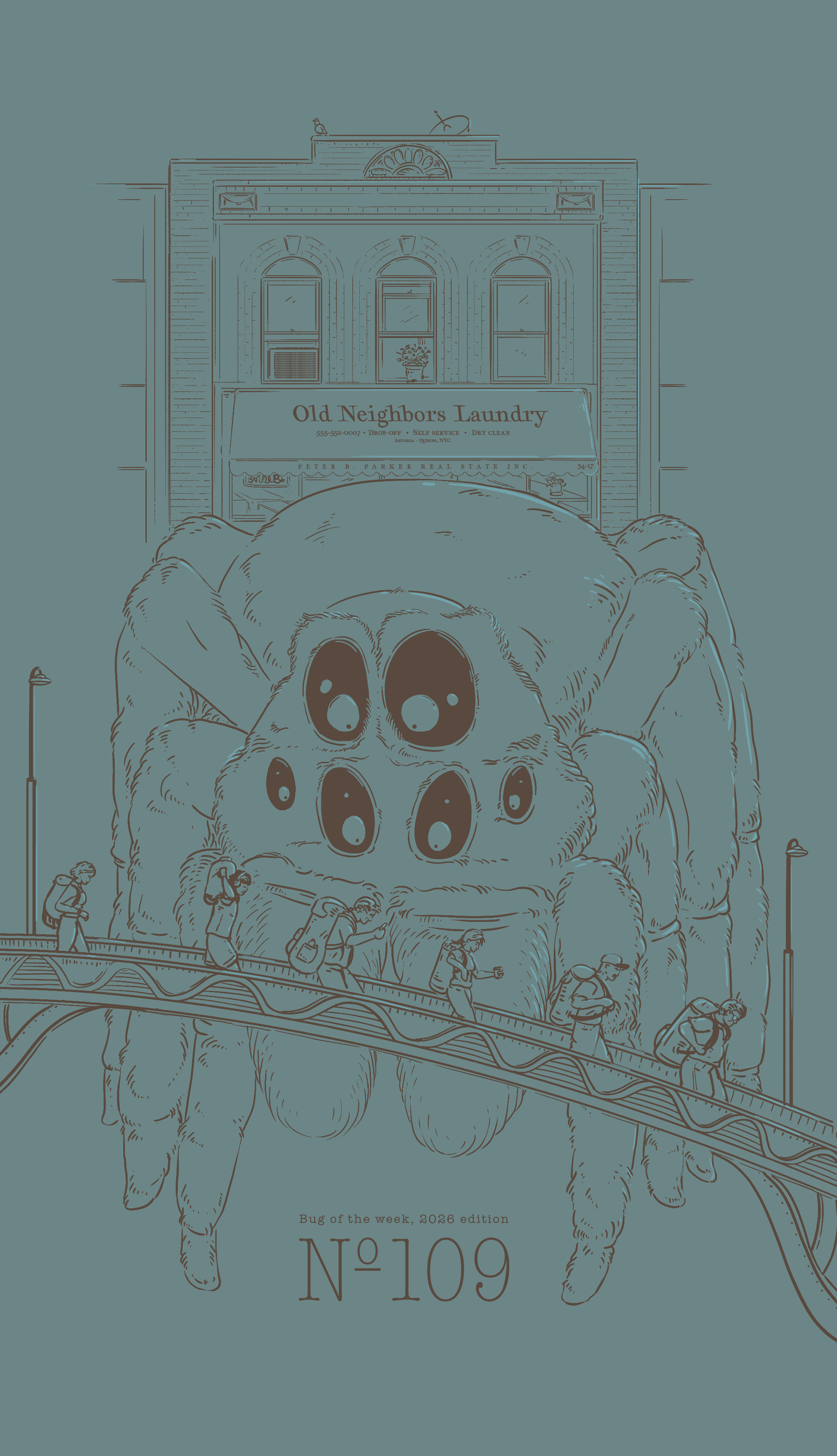
I don’t know about you, but my imagination said it was a gigantic spider watching—without moving—the people crossing back and forth.

I guess people is always immersed on its own world so they just skip the gigantic things around them. I really enjoy little details of things, what do you think, are you an admirer of details, or do you skip over things because you live with a laser focus?

Thanks for reading, see you next week!

Did you saw the pigeon in the main illustration?

Day 108

If you want to be queen, you don’t hold your breath.

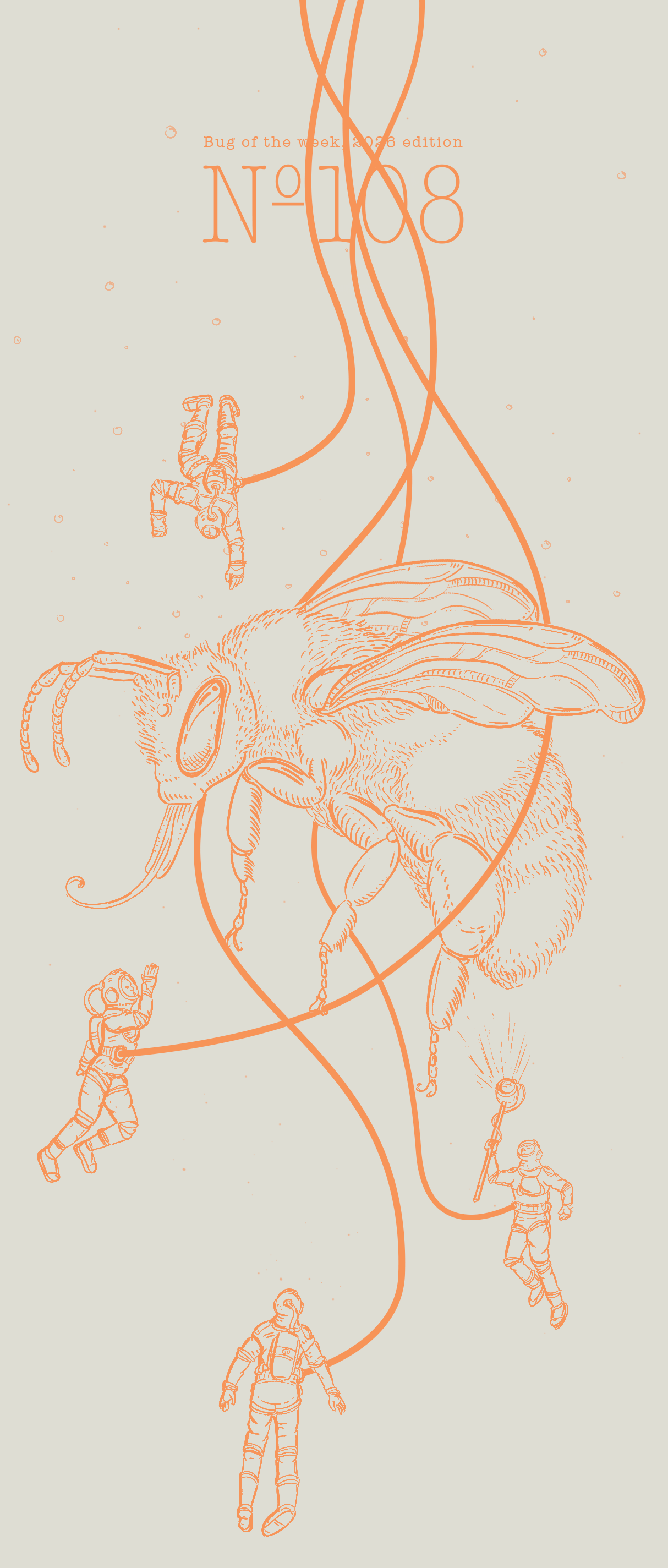
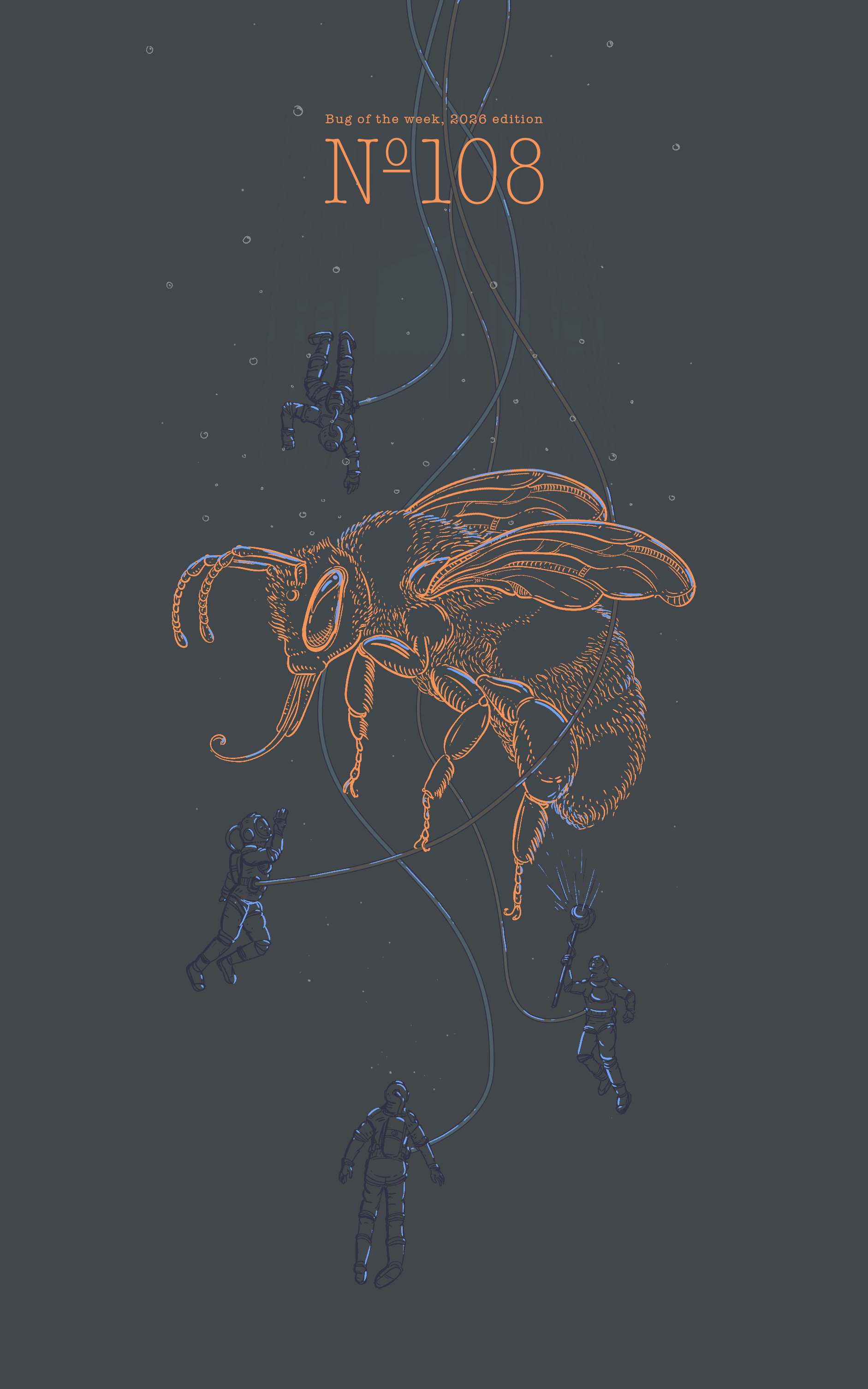
Here’s one more fun story from Trilobites. Scientists have made an interesting discovery about bumblebees: it turns out that they appear to be able to breathe even when completely submerged. A pretty good way to survive flooding as they emerge from a hibernation-like phase every winter.

It’s actually no small feat; these insects can spend months in a state of reduced activity. This simply blew my mind—I had always wondered how these buddies survived the winter, and the answer turned out to be even more creative than I could have imagined.

Imagine what it would be like to stumble upon a bumblebee—Nautilus-style—with the divers connected to long breathing hoses… and there, peacefully, right in the midst of it all… boom! you find this magnificent creature that has discovered a different way to keep breathing while it waits to take flight once spring arrives.

Thanks for visiting my blog.

I hope to see you again next week with another fun story about a cool insect and how it inspired me to create one more doodle.

Day 107

A Dutch book from 18th century.

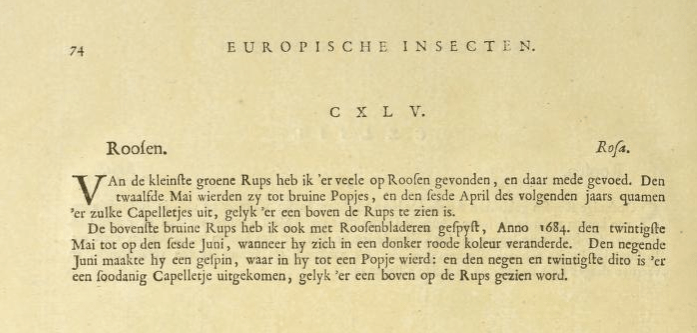
Sometimes you don’t even need to understand everything to consider it inspiring or fascinating. If you speak dutch, maybe this would be easy, I truly made an effort to get a little context of what I was seeing but neither Google Translate nor I could quite make out what the pages of Maria Sibylla’s book is properly describing.

But don’t take me wrong, but even if you get a vague sense of the pages and its descriptions, it is simply fascinating. Give it a try and see what I mean.

Some of the passages, like the one above, introduce the illustration plates. They appear to be a field journal containing observations that lend meaning to the illustrations in the following pages. These books are somewhat like silent films, where you would see a text vignette displaying the dialogue, followed by the action.

Here’s an sample I got from google translate on the first lines:

The hanging green caterpillar also eats roofs. This creature often pecks at its back and lets itself go up and down on a little thread that comes out of its mouth. On the tenth of May it became a pupa, and on the eighteenth a black fly.

You can get a vague idea of the descriptions, sure; but it’s obvious that the image-to-text reader was not working smoothly as expected. Google’s translation continued:

I also depicted your uppermost brown caterpillar feeding on oak leaves, from May 20th, 1684, until June 6th, when it changed into a dark red color. On the ninth of June, it spun a cocoon, within which it transformed into a pupa; and on the twenty-ninth of the same month, a small moth emerged—precisely like the one seen atop the caterpillar.

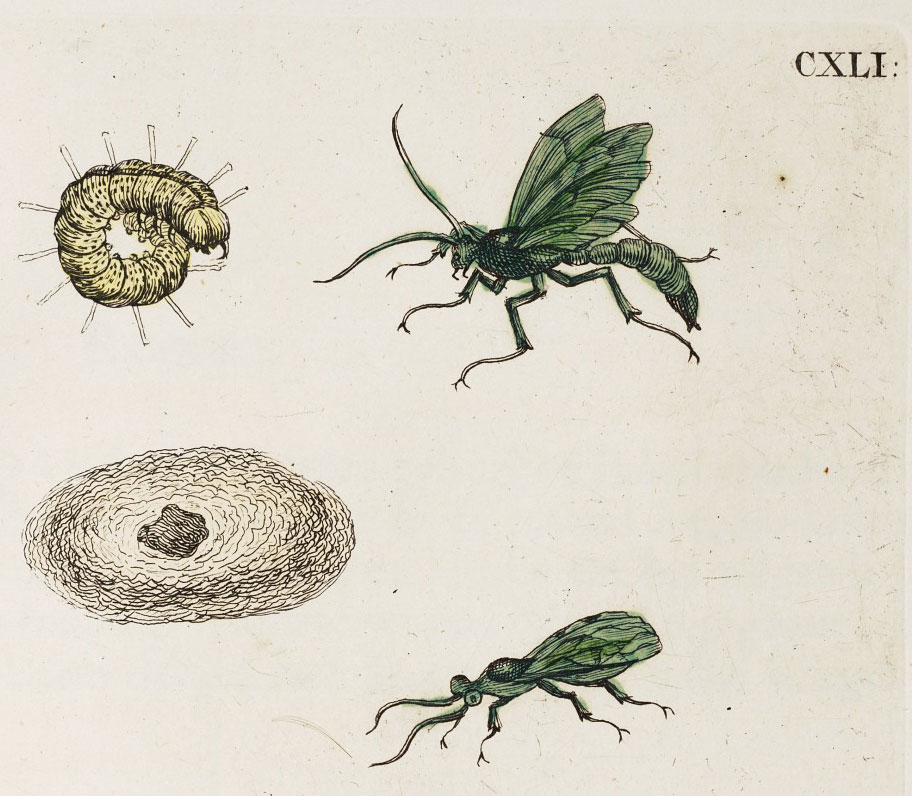
The book is filled with beautiful botanical and bug illustrations, here’s a small one that I really liked:

While I was contemplating these pages, I find myself trying to connect with something familiar—something I may have seen before. But this connection isn’t necessarily tied to the specific subject I’m observing.

Maybe it’s easier for our brain to connect with something more vague—perhaps a resemblance in the colors of something I once saw, or in the shapes or postures.

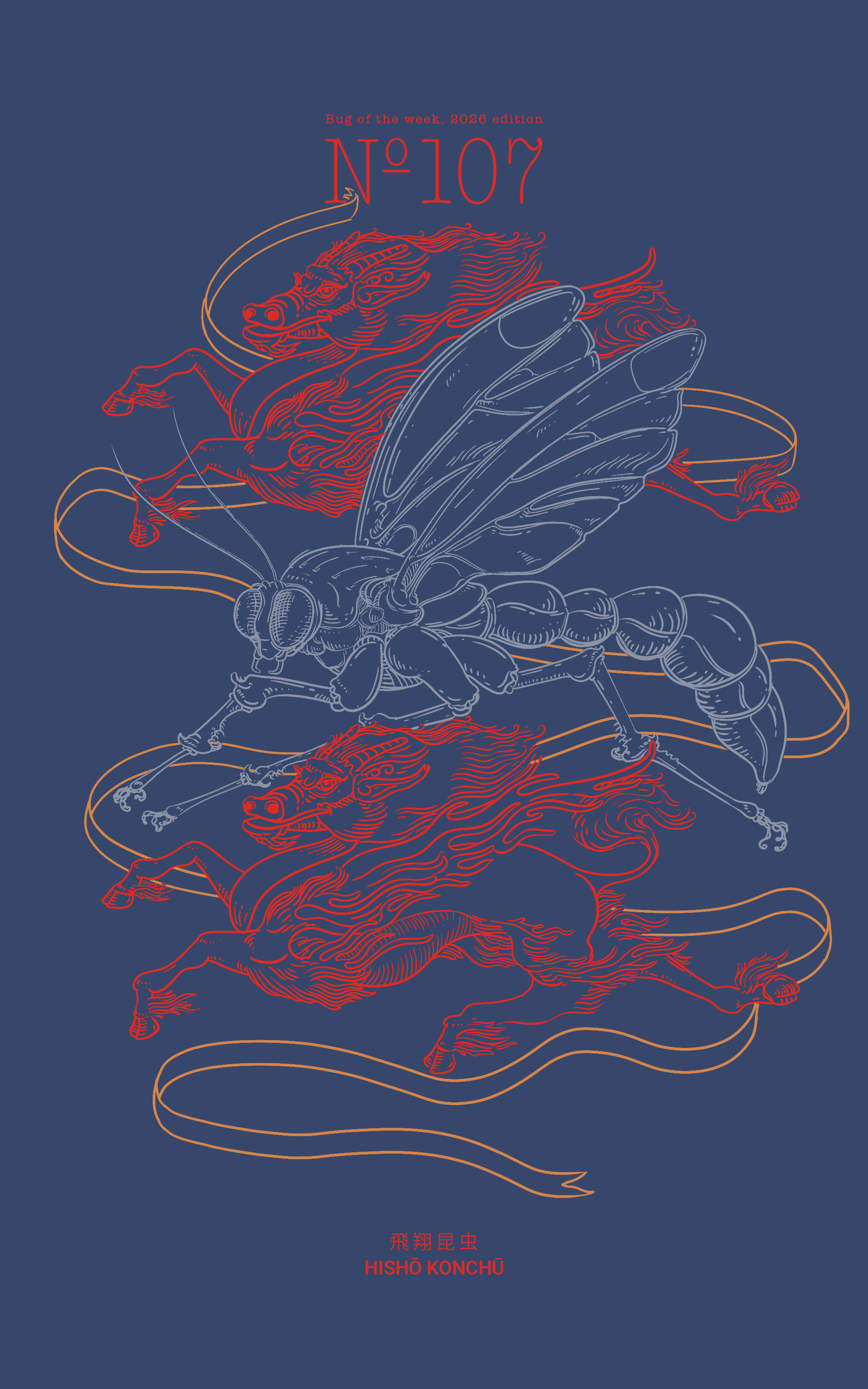
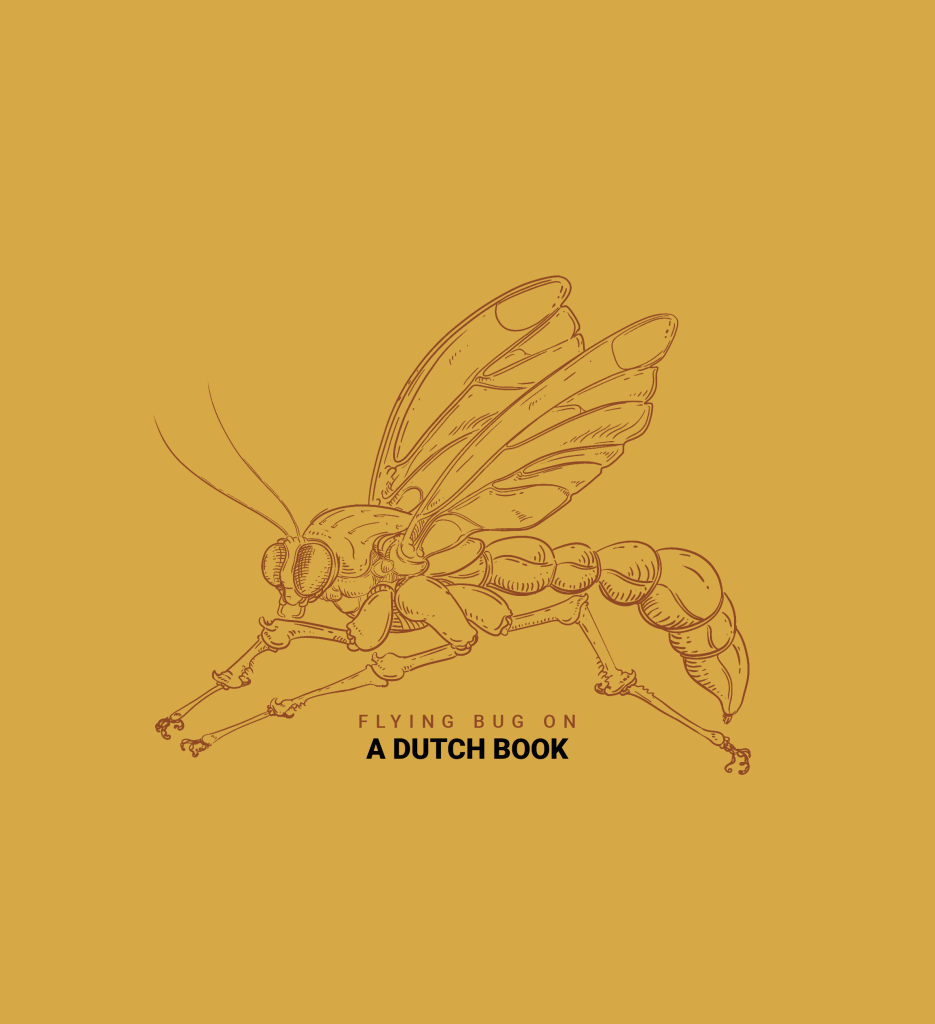
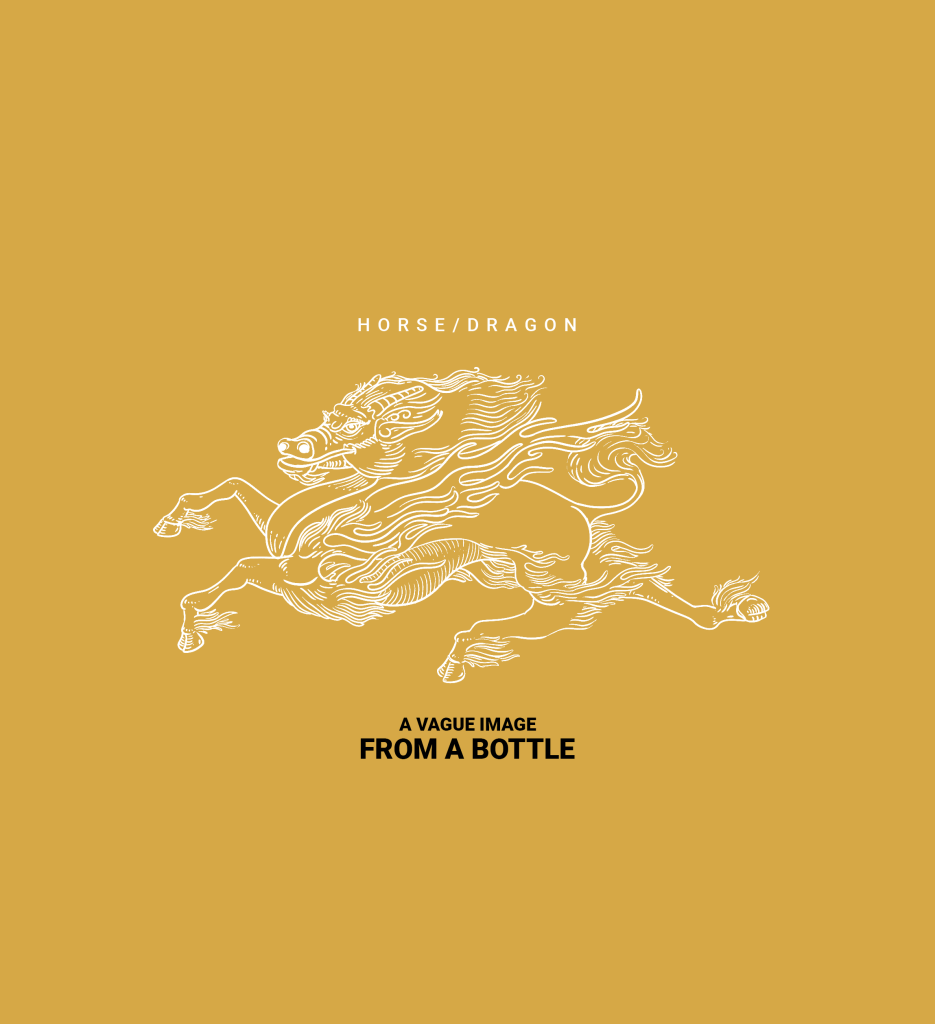
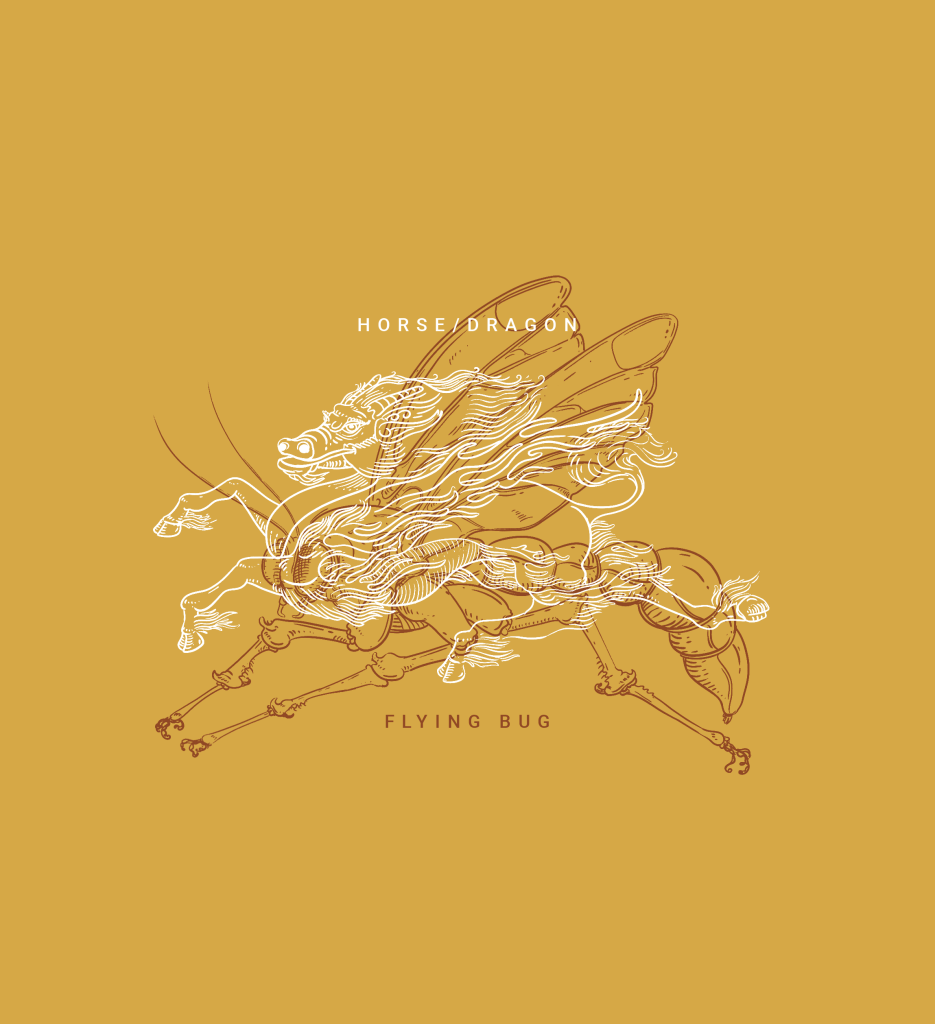
That green bug above called a memory of a popular illustration of a horse (or actually a dragon) that I first saw it on a bottle. There are many paintings with similar poses where horses extend their legs almost as if to fly over obstacles. Here’s what showed up into my head:

Maybe I’m just poorly wired; somewhere in the recesses of my memory, there was a horse with its legs extended—and right in the middle of searching for references, my mind said: “That’s it! This one.”

But what did you think when you saw that first image? I suppose there’s a good chance it wasn’t the same thing I saw.

Our experiences affect how we view things. We are influenced by things we find interesting in our life journey—we store them away to reference later.

On Sundays, I simply sit back and see where the stylus takes me.

I hope you enjoyed this post; I’ll see you next week to tell you more about another one of my mind’s wanderings, conspiring with the stylus of my Wacom.

Day 106

The Times Trilobites.

The inspiration for this week’s illo came from this article, which talks about a project that scanned ants to recreate their internal and external structures—very similarly to how a CT scan does, they call it Antscan.

The project generated a database of +2000 specimens of dead ants resting inside glass vials in strange poses. As you can imagine, some of these scans immediately captivated my attention. One of the first I bookmarked was specimen 721 because under the scanner, 721 looks almost like an alien creature to me.

Biomedisa, specimen 721. [ Dilobocondyla fouqueti ]

In addition to the inside slices of each ante, in Antscan you can also preview the ant in 3D, look at 721 here.

Specimen 721 is a Dilobocondyla fouqueti ant, these folks are mostly found in Vietnam and China wiki says. In real life they have a sort of hairs and don’t actually look like some hybrid mix of an ant and a peanut, but still you can see a little of this crazy texture on them.

But beyond my fascination with this Asian ant, my mental references immediately placed 721 in the same family of species as Ben Grimm, The Thing.

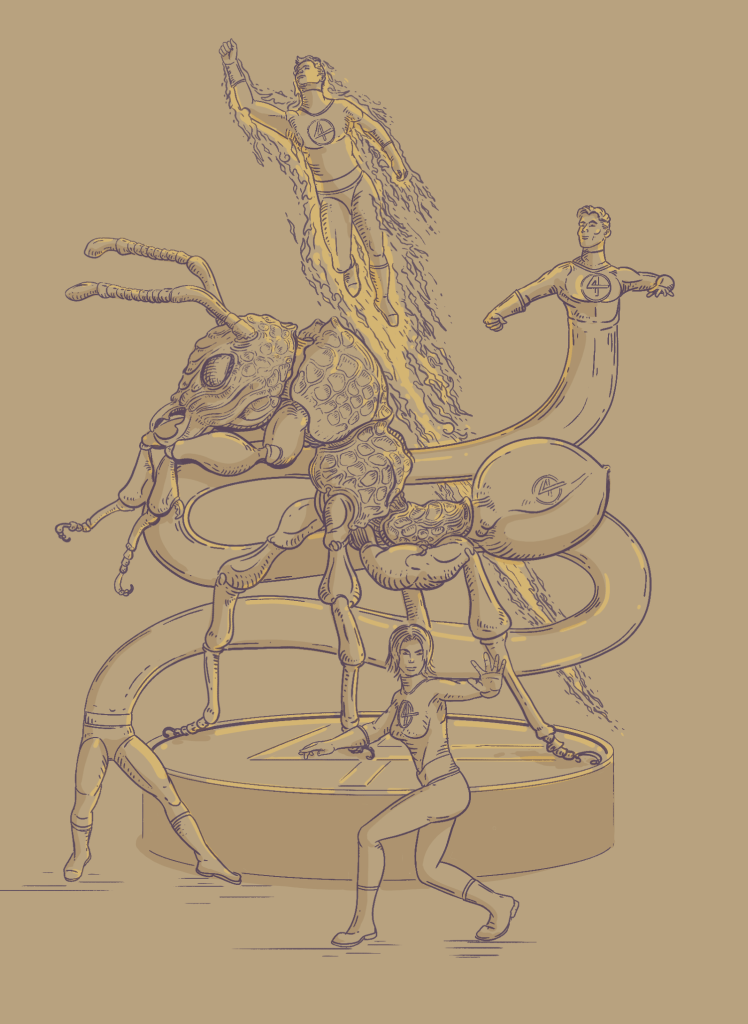
I’m happy to be back on illustration mode every Sunday. If you are curios about my process, I usually do doodles for poses, then an outline layers, then the color, and finally shadows and light. Here is a version with outline + light:

Thanks for visiting my blog; come back next week to read about a new source of inspiration I stumbled upon for creating another illustration.
I hope you have a fantastic weekend!

Day 105

HOLA!

It’s been a long break due to multiple commitments, but I’m finally back with more bugs!

In my free time, I sometimes stumble upon wonderful places that fill my eyes with inspiration for my work; sometimes I also come across books of a certain kind that can have that effect. That was precisely the case this week.

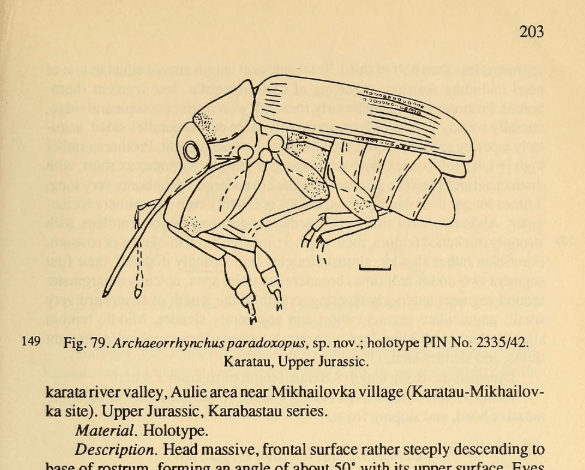
Just take a look at this book from the collection of the Smithsonian Libraries from 1992. The page below shows a diagram of a Jurassic era beetle fossil.

Age of Reptiles, Arnolʹdi, L. V.; Vandenberg, Natalia J.; Smithsonian Institution Libraries, 1992.

Isn’t that amazing? A creature from +100 million years ago. Simply wow! My friend, if you can’t find inspiration with that, then nothing will work!

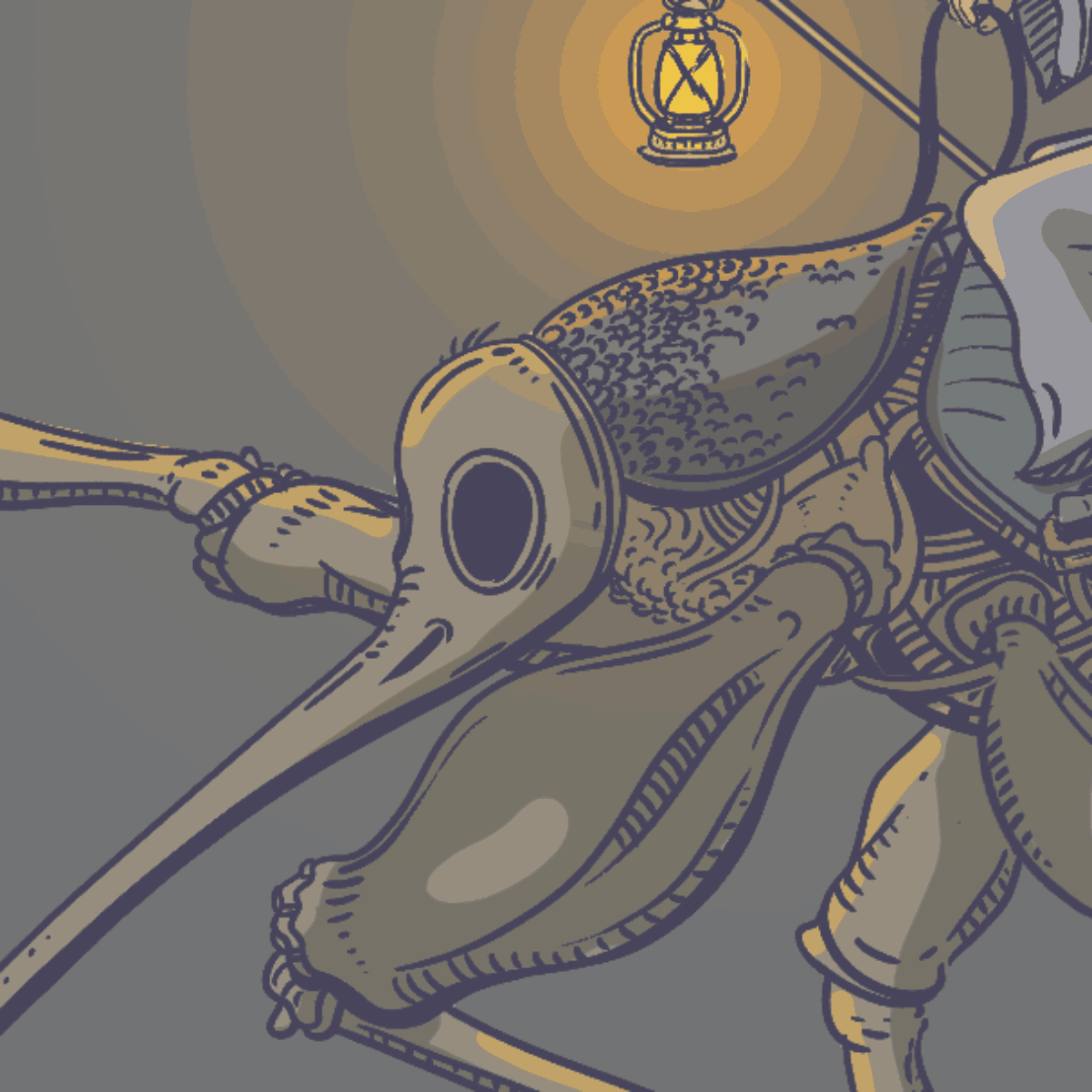
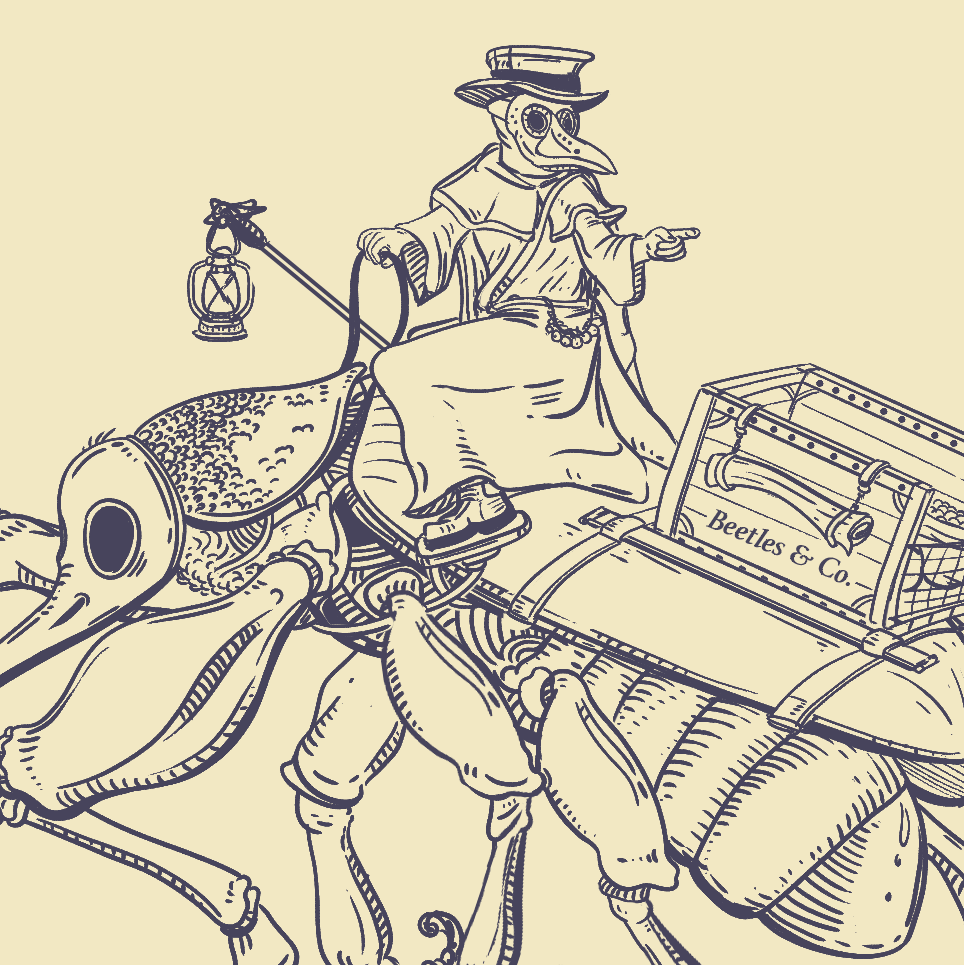
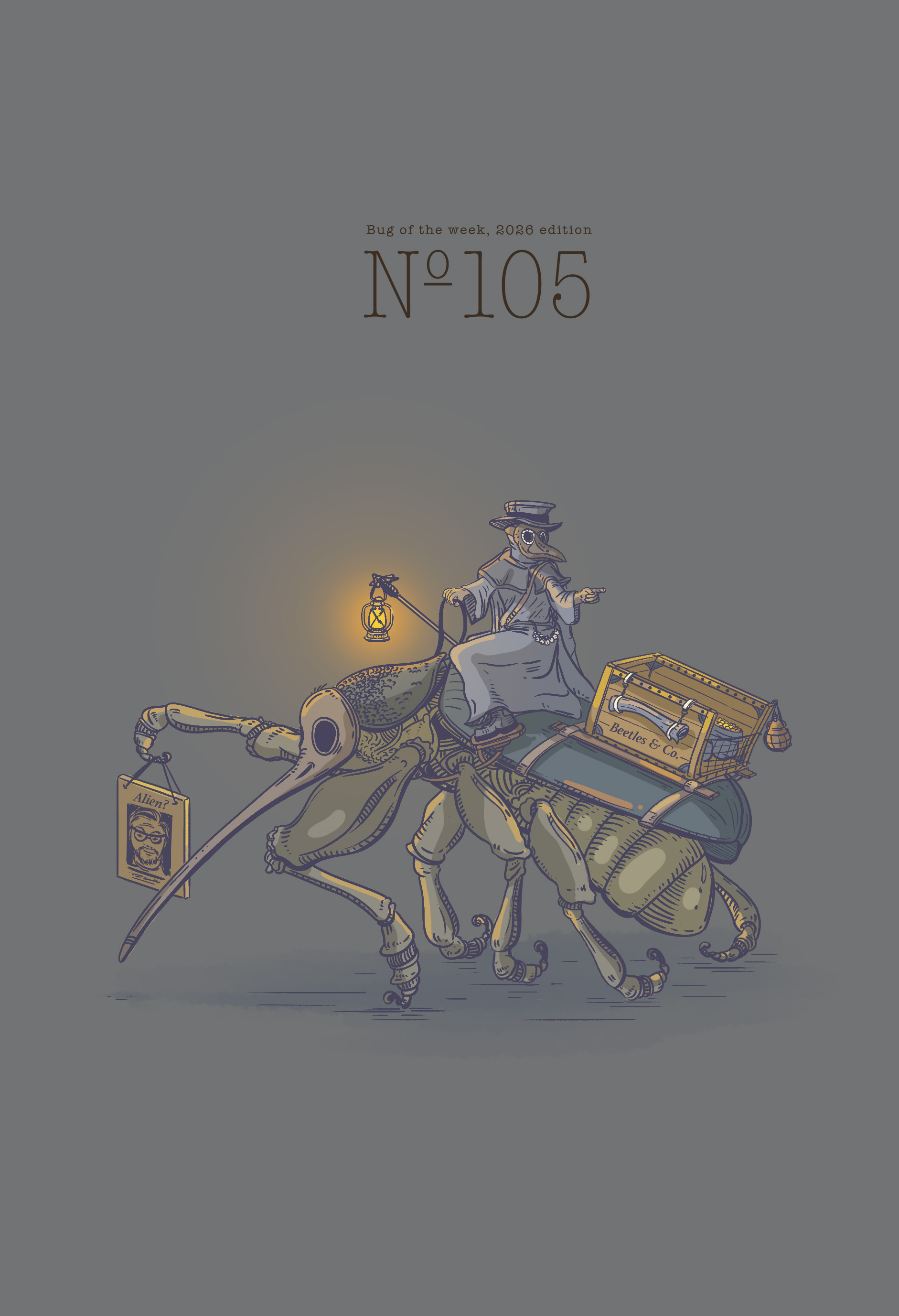
The moment I saw that drawing, a medieval doctor’s mask immediately popped into my head—that classic image we’ve all seen at some point in pop culture references… I know there’s more behind the iconic image. But I’m sure you know what I’m talking about. Anyway, that was the very first image that sprang to my imagination and here’s how it looked in my head:

So, without further ado, welcome to the third cycle of my Sunday Sketchbook, bugs are back!

Thanks for coming back to my site after so long, see you next week with another creature of mysterious origin.